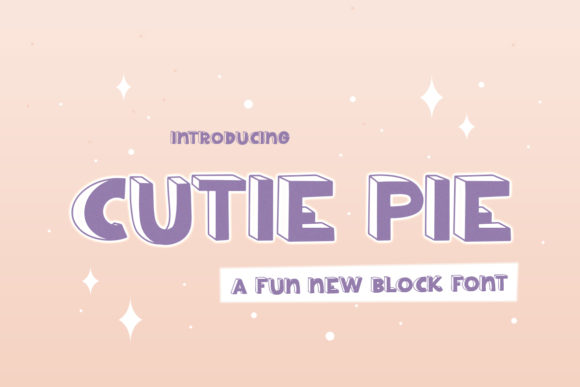
Cutie Pie Font for Web Design
Cutie Pie is a fun and authentic display font that brings a sweet and friendly vibe to digital projects. Its chunky characters make it visually striking, yet it maintains an approachable personality ideal for web designers and UI creators looking to add character to their layouts.
Cutie Pie for Creative Portfolio Websites and Brand Identity
Cutie Pie is an excellent choice for creative portfolio websites where a unique visual identity is essential. As a display font, it works well for section headers, project titles, and branding elements that need to stand out while maintaining a cohesive tone. When used in combination with a clean sans serif font for body copy, it creates a balanced design that feels both professional and playful.
For digital product creators and web designers, Cutie Pie can be used in logo designs, hero sections, and content headers to establish a brand's personality. Its chunky structure ensures legibility on larger screens, while its friendly curves add warmth to the overall aesthetic.
Cutie Pie for Online Store Banners and E-Commerce Pages
Online store owners can use Cutie Pie to create eye-catching banners, call-to-action buttons, and promotional headlines. The font’s bold strokes make it ideal for short phrases like “Limited Edition” or “Free Shipping,” drawing attention without overwhelming the user experience.
When applied to small buttons or mobile menus, Cutie Pie requires careful sizing and spacing to maintain readability. Pairing it with a simpler font for secondary text helps guide the user’s focus and improves scanning behavior across different screen sizes.
Cutie Pie for Coaching and Educational Websites
Cutie Pie is a great fit for coaching and educational websites aiming to convey approachability and warmth. It works well for course titles, feature highlights, and motivational statements that need to feel inviting rather than formal.
Designers should consider using Cutie Pie for headings and subheadings in landing pages, as its visual weight helps establish a clear visual hierarchy. However, it should be used sparingly to avoid disrupting the flow of content on longer pages.
Cutie Pie for Blog Headers and Content Sections
Blogs and content sites can benefit from using Cutie Pie in headers and graphic elements to break up long paragraphs and add visual interest. Its chunky style makes it ideal for section titles, pull quotes, and decorative accents that enhance the reading experience.
On mobile devices, it’s important to ensure that Cutie Pie is large enough to remain legible. Using it on dark backgrounds or image overlays may require adjusting the contrast to maintain readability without sacrificing style.
Cutie Pie for Social Media Graphics and Digital Ads
Social media graphics and digital ads often require fonts that command attention while fitting within tight design constraints. Cutie Pie’s bold and friendly appearance makes it a strong option for headlines, captions, and CTA buttons in online ads.
Its chunky design also lends itself well to social media visuals where a playful tone is desired. Whether used in Instagram posts, Facebook banners, or LinkedIn content, Cutie Pie adds a touch of personality without overpowering the message.
Cutie Pie for Product Landing Pages and SaaS Marketing
Product landing pages and SaaS marketing materials can use Cutie Pie to reinforce a brand’s tone and create a memorable visual identity. It works best for headlines, feature titles, and key selling points that need to stand out from the surrounding content.
Designers should pair Cutie Pie with a more neutral font for body text to maintain balance. This approach ensures that the font remains a focal point without making the page feel cluttered or difficult to read.
Cutie Pie for Digital Brand Kits and Logo Design
Digital brand kits and logo design projects benefit from fonts that reflect a brand’s personality. Cutie Pie is particularly effective for brands targeting a youthful, creative, or whimsical audience. Its chunky structure gives it a strong presence, making it suitable for logos, icons, and branded assets.
When used in logo design, Cutie Pie can be customized with alternate characters or ligatures to add a unique touch. This flexibility allows designers to tailor the font to specific brand needs while maintaining its signature charm.
Cutie Pie for Responsive Web Layouts and Mobile Optimization
Responsive web layouts require fonts that adapt well to different screen sizes and resolutions. Cutie Pie performs well on desktops and tablets but may need adjustments for smaller mobile screens. Ensuring sufficient line height and spacing helps maintain readability across all devices.
Designers should test Cutie Pie in various contexts, including dark mode, light mode, and image overlays, to ensure it remains legible and visually appealing. Proper font pairing and styling help maintain consistency in digital experiences.
Cutie Pie for Commercial Font Licensing and Web Use
Web designers and digital product creators should verify the commercial licensing terms for Cutie Pie before using it in client projects or online stores. Many premium fonts offer webfont licenses that allow safe and legal use across websites and digital assets.
Checking for available styles, file formats, and multilingual support is also important when integrating Cutie Pie into a broader design system. These considerations ensure that the font meets the technical and stylistic requirements of the project.